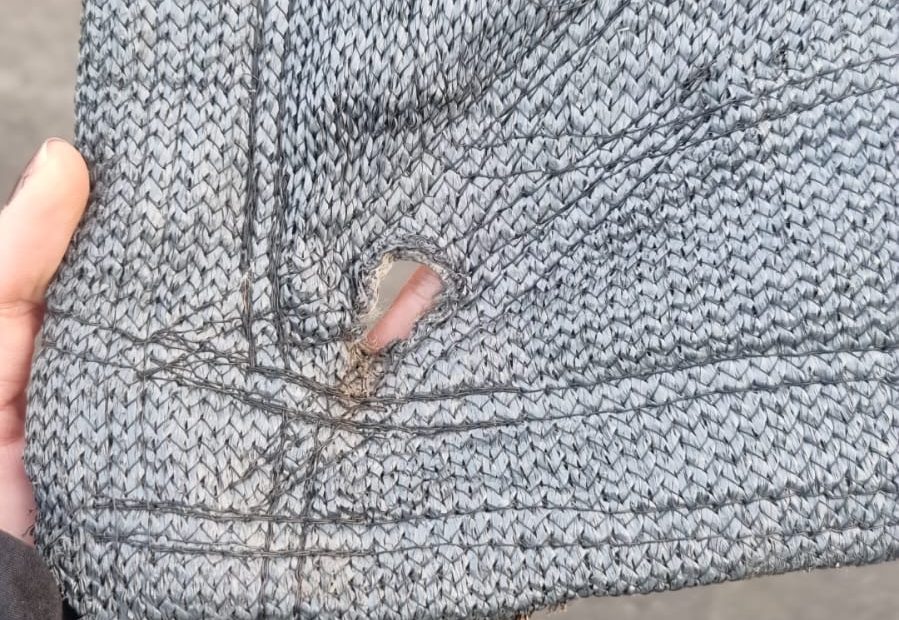
If you pulled up into your driveway today and noticed your overhead sails looking a little droopy, tired, or frayed, you are probably sitting with a dilemma: Should you pull the trigger on a brand-new replacement net, or can a simple structural repair save your wallet?
We treat your outdoor shading assets like a high-quality wardrobe. Sometimes a piece just needs a professional tailoring tune-up to look good as new; other times, the fabric has simply run its course and is past its prime.
Before you make a decision, let’s look at how to accurately diagnose your fabric.
The Quick Fix: Signs Your Sail Just Needs a Re-stitch
Think of a re-stitch like getting a zipper or a seam repaired on your favourite jacket. The core fabric is still tough and durable, but the high-tension border threads have taken the brunt of the weather.
Your shade structure is usually an excellent candidate for a quick, cost-effective repair if it exhibits these issues:
- The Unraveled Border: The main body of the net is flawless, but the heavy-duty thread securing the straight edges or the reinforced corners is starting to pull apart.
- The Corner Anchor Slouch: The steel D-rings are pulling away because the heavy nylon webbing or stitching holding them tightly in place has snapped, making the entire structure sag.
- Wind-Snapped Points: A sudden wind gust popped a section loose from its framework, but the fabric itself didn’t shred or tear down the middle.
If your setup has been up for less than five or six years, the material likely has plenty of structural integrity left. Our team can quickly take the sail down, run it through our heavy-duty industrial double-lock stitching machines, reinforce your high-stress anchor points, and tension it right back up to look brand new.
The Full Upgrade: When It’s Time to Replace the Material
There comes a point where attempting to patch up old shade cloth is a losing game. When the intense UV rays have fundamentally altered the chemical bonds of the plastic weave, trying to stitch it together is impossible because the material will just tear under the machine needle.
It is officially time to say goodbye and invest in a fresh net if you spot these warning signs:
- The Crumble Test: Gently pinch and rub the fabric between your thumbs. If it feels completely stiff, rough, or leaves tiny flakes of plastic on your skin, the built-in UV stabilizers are entirely depleted.
- Widespread Micro-Tears: Instead of a clean break at a seam, you can see dozens of random, fuzzy mini-holes opening up across the center of the canopy.
- The Permanently Stretched Bag: If the middle of the fabric sags like an oversized t-shirt, it has reached its maximum stretch limit over time and can no longer hold proper structural tension.
- Chalky Discolouration: A deep green, blue, or charcoal sail that has bleached out into a dull, pale, patchy grey means the fabric’s lifespan is up.
An old, brittle canopy isn’t just an eyesore; it’s a safety hazard. Swapping it out gives you a perfect excuse to instantly elevate your property’s curb appeal with a modern colour refresh and upgraded UV barrier protection.
Quick-Glance Decision Matrix
| What You Are Seeing | What It Actually Means |
|---|---|
| Clean separation where two panels meet | Needs a Re-stitch |
| Material flakes, dusts, or breaks when handled | Needs a New Net |
| Sagging caused by loose edge ropes or rings | Needs a Re-stitch |
| Random small holes scattered across the middle | Needs a New Net |
Let’s Secure Your Outdoor Space Before the Weather Turns
Leaving a compromised canopy blowing around in a Gauteng breeze is a major risk. A loose or unraveled seam can catch a sudden gust of wind during a thunderstorm, acting like a giant sail that can easily bend your supporting steel columns or crack your masonry anchors.
Don’t guess and risk your property. Click here to Chat to us directly on WhatsApp and snap a quick close-up photo of your fabric. We’ll give you a straight-forward, honest evaluation and an accurate quotation to keep your assets protected!